CRM vs CDP: Which is Right for Your Business?
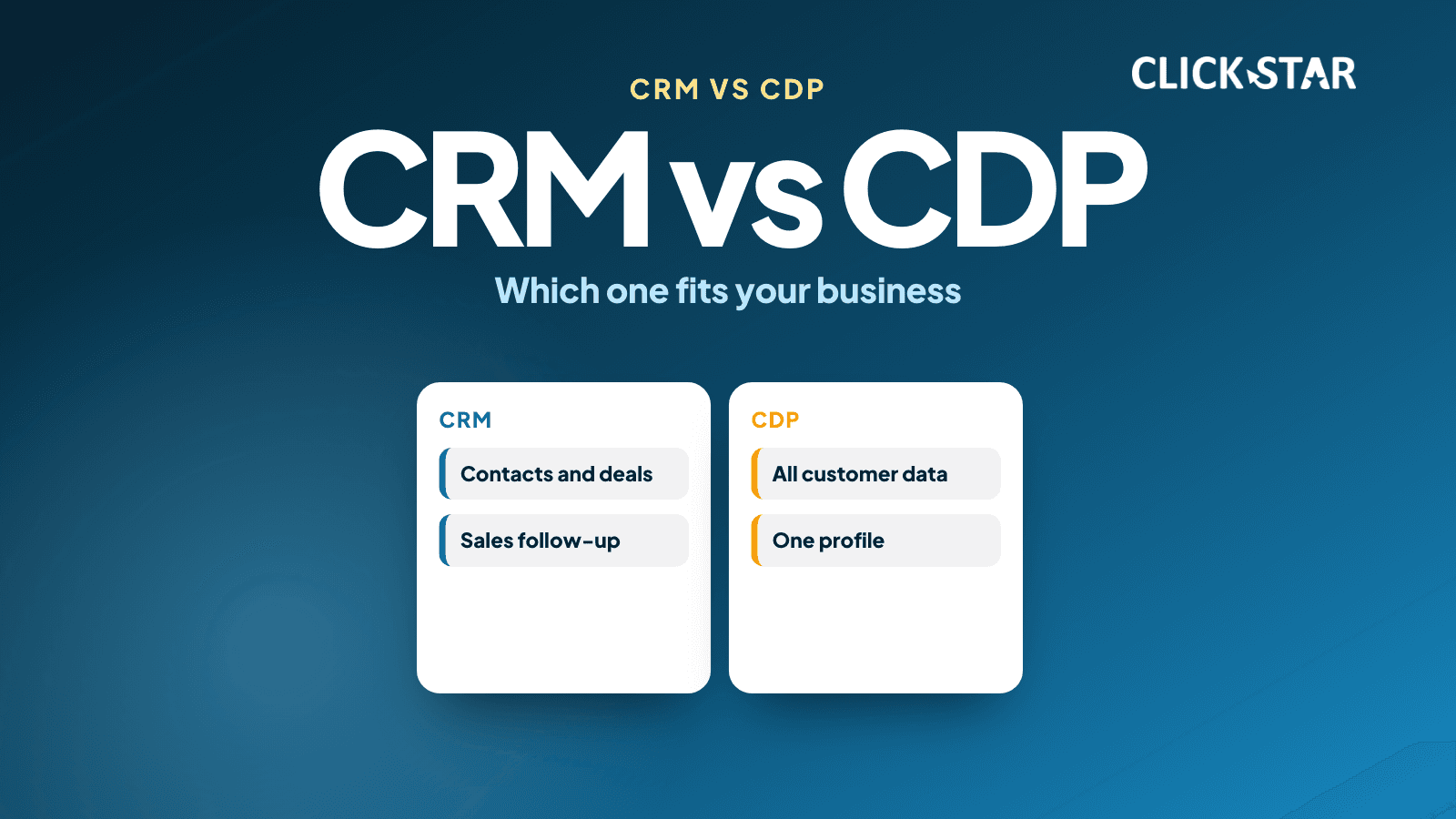
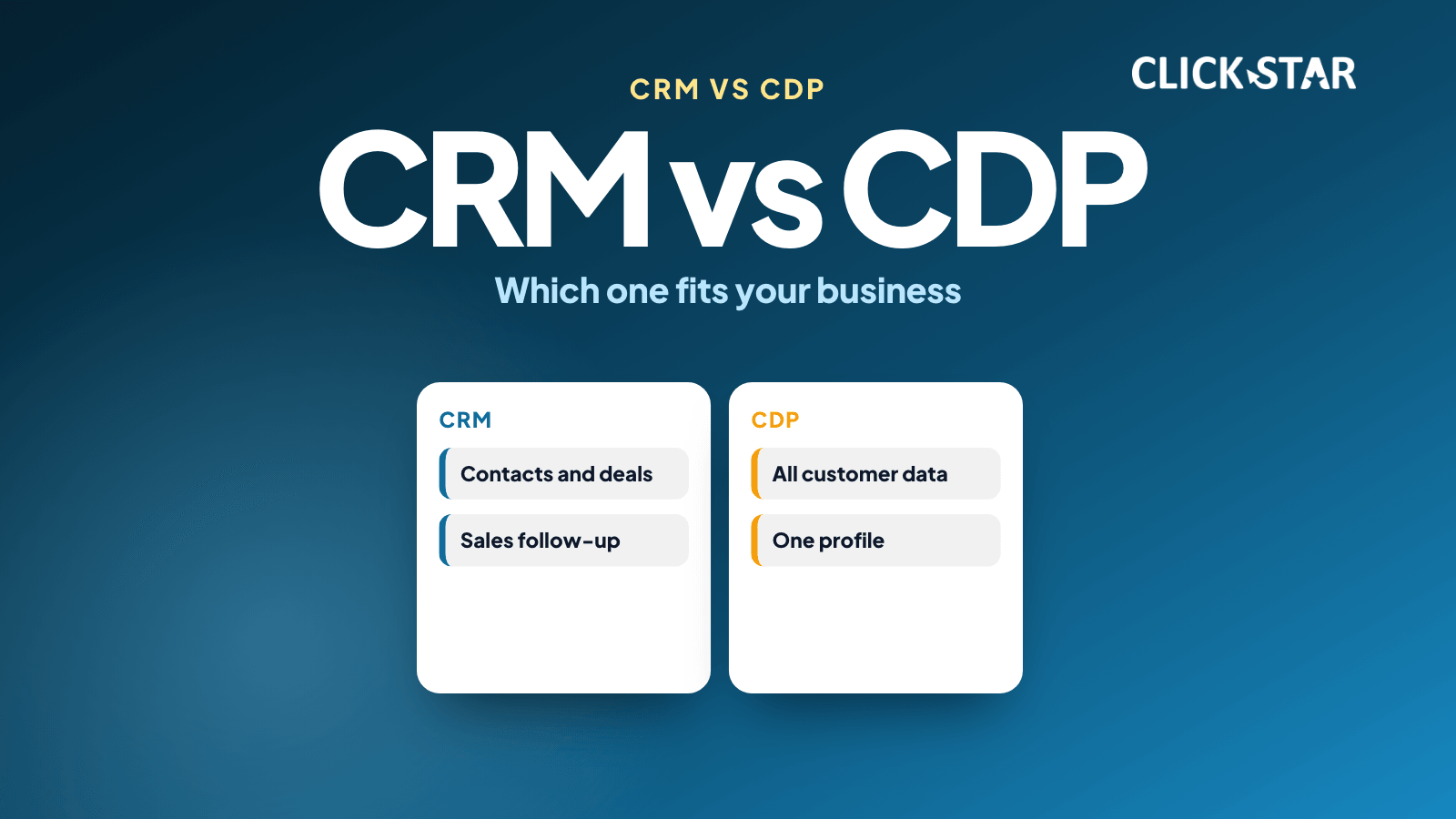
Detailed comparison of CRM and CDP to help you choose the right solution.
CRM vs CDP: Which one is right for your business?
Customers today interact with a business through many touchpoints: the website, social media, email, stores, mobile apps and the sales team. As a result, customer data becomes more scattered and harder to manage. In that context, CRM and CDP have become 2 solutions that many businesses are looking at.
Still, quite a few people confuse the 2 platforms or are unsure which one fits. So how do CRM and CDP differ? Which one should a business invest in to get the most out of its operations? Read on for a detailed look.
What are CRM and CDP?
Before making a decision, a business needs to understand the nature and role of each platform.
What is a CRM?
A CRM (Customer Relationship Management) system helps a business store customer information and manage the whole interaction process, from reaching out and nurturing to selling and after-sales care.
A CRM is usually used by sales, customer care and marketing teams to track transaction history, manage sales opportunities, automate nurturing workflows and improve the customer experience.
Common CRM functions include:
- Managing customer information.
- Tracking the sales pipeline.
- Managing business opportunities.
- Automating customer care workflows.
- Managing interaction history.
- Measuring the performance of the sales team.
What is a CDP?
A CDP (Customer Data Platform) is a customer data platform that can collect, unify and process data from many different sources to build a single customer profile.
Unlike a CRM, a CDP focuses on building a complete picture of customer behavior from online and offline data. It supports deeper analysis, personalized experiences and more precise marketing campaigns.
A CDP can collect data from:
- Websites.
- Mobile apps.
- Email marketing.
- Social media.
- The CRM.
- POS systems.
- E-commerce systems.
- Advertising tools.
When should a business choose a CRM?
A CRM suits businesses that struggle to manage customers and the sales process.
-
A large sales team: if the business has many salespeople, a CRM helps manage opportunities, track the progress of customer care and reduce data loss.
-
A need to standardize the sales process: a CRM supports a single process from receiving a lead to closing the deal and caring for the customer afterwards.
-
A wish to improve customer care quality: with interaction history stored, staff can grasp customer needs faster and offer suitable support.
-
A limited investment budget: for many small and medium businesses, a CRM is usually a sensible starting point before moving on to more advanced data solutions.
When should a business choose a CDP?
A CDP suits businesses that are stepping up multi-channel marketing and need to dig deeper into their data.
-
Many sources of customer data: data from the website, apps, ads, social media or physical stores is often fragmented. A CDP helps unify and synchronize these sources.
-
A personalization strategy: if the business wants to send the right message to the right customer at the right time, a CDP delivers the most value.
-
A focus on marketing growth: a CDP supports detailed customer segmentation, behavior analysis and campaign optimization.
-
A CRM is in place but the data is not well used: many businesses have deployed a CRM yet still do not understand the customer journey. This is a good time to add a CDP to complete the data ecosystem.
CRM vs CDP: which should a business choose?
The answer depends on the business goals and how mature the business is with data.
If the main goal is to manage customers, improve sales performance and standardize the care process, a CRM is the right choice.
If the business wants to understand customer behavior in depth, run personalized marketing and use data to grow, a CDP brings more value.
In practice, this is not an "either or" question. Many businesses now combine a CRM and a CDP to build a complete data ecosystem. The CRM manages relationships and transactions, while the CDP provides a 360-degree view of the customer.
The trend of combining CRM and CDP in digital transformation
When customer experience becomes a competitive advantage, connecting data between platforms is becoming an inevitable trend.
Combining a CRM and a CDP helps a business:
- Synchronize multi-channel customer data.
- Build a single customer profile.
- Make customer segmentation more accurate.
- Personalize marketing activities.
- Improve sales and customer care performance.
- Optimize marketing cost.
- Make decisions based on real data.
The more a business grows, the more important it becomes to integrate these platforms to create a seamless experience for customers.
Conclusion
CRM and CDP both play an important role in customer data management, but they serve different goals. A CRM helps a business manage relationships and optimize the sales process, while a CDP helps unify data and understand customer behavior across many touchpoints.
Instead of chasing technology trends, a business should assess its real needs, growth goals and data readiness to choose the right solution. Investing in the right platform at the right time helps a business improve the customer experience, raise operational efficiency and build a lasting competitive advantage.
Related posts
November 03, 2026
1 customer, 3 profiles: how CDP identity resolution can fail
Read more
October 22, 2026
Email marketing for business: consented lists, segmentation and correct measurement
Read more
October 22, 2026
Zalo OA and ZNS for business: transactional messages, conditions, costs and rules
Read more
Need tailored advice for your business?
Click Star helps you build a solution that fits your industry and scale. We answer every question during business hours.