5 AI Trends in Marketing You Cannot Miss in 2026
Discover the AI trends shaping marketing in 2026 and how to apply them to your business.
Artificial intelligence (AI) is changing how businesses reach customers, run campaigns and optimize marketing performance. Where AI was once used mainly for basic automation, by 2026 it has become part of the growth strategy of many businesses.
From content creation and data analysis to personalized experiences, AI is opening new opportunities but also raising real challenges for marketing teams.
So what are the most notable AI trends in marketing in 2026? What does a business need to prepare so it does not fall behind? Read on to find out.
Why should businesses care about AI trends in marketing?
Consumers increasingly expect fast, personalized and consistent experiences at every touchpoint. At the same time, customer data keeps growing, which makes manual processing less and less effective.
AI helps solve this problem by:
- Analyzing large volumes of data in a short time.
- Automating repetitive tasks.
- Predicting customer behavior and needs.
- Supporting content creation and campaign optimization.
- Improving the multi-channel customer experience.
Businesses that use AI well gain an advantage in cutting cost, raising performance and strengthening their competitiveness.
1. Generative AI becomes a capable "assistant" for marketing teams
Generative AI has grown well beyond simple content creation. In 2026 it is widely used to support many steps of the marketing process, from market research to campaign delivery.
AI can help produce blog posts, marketing emails, video scripts, ad copy, product descriptions or social media posts in a short time. It also helps marketers analyze trends, suggest topics, build outlines and propose messages that suit each customer group.
However, AI cannot fully replace the human element. AI-generated content still needs to be reviewed to make sure it is accurate, fits the brand positioning and meets the real needs of users. Businesses that combine the speed of AI with human strategic thinking gain a significant advantage in their marketing.
2. Hyper-personalization: personalization at the level of each customer
Personalization no longer stops at addressing a customer by name in an email. AI is helping businesses create experiences that fit each individual based on real-time behavioral data.
By analyzing purchase history, website visits, cross-channel interactions and user preferences, AI can recommend content, products or offers that suit each customer better. The timing of an email, the ad message or the call to action is also adjusted flexibly to raise the chance of conversion.
Deep personalization not only improves the customer experience but also brings practical benefits such as higher conversion rates, stronger brand loyalty and a more efficient marketing budget. It is seen as one of the key trends that help businesses stand out in an increasingly fierce market.
3. AI supports predictive analytics and decision-making
One of the standout AI trends in marketing for 2026 is data-driven prediction. Instead of only looking back at past results, businesses can make decisions proactively based on well-grounded forecasts.
AI can identify customers who are likely to buy, predict the risk of churn or pinpoint the most promising customer groups to prioritize. It also analyzes campaign performance to identify the most effective channels and suggest a more sensible budget allocation.
With these forecasts, marketers can build proactive plans, reduce risk and optimize resources. Moving from "reactive" to "predictive" thinking will help businesses raise their marketing performance in the long term.
4. AI chatbots and virtual assistants get smarter
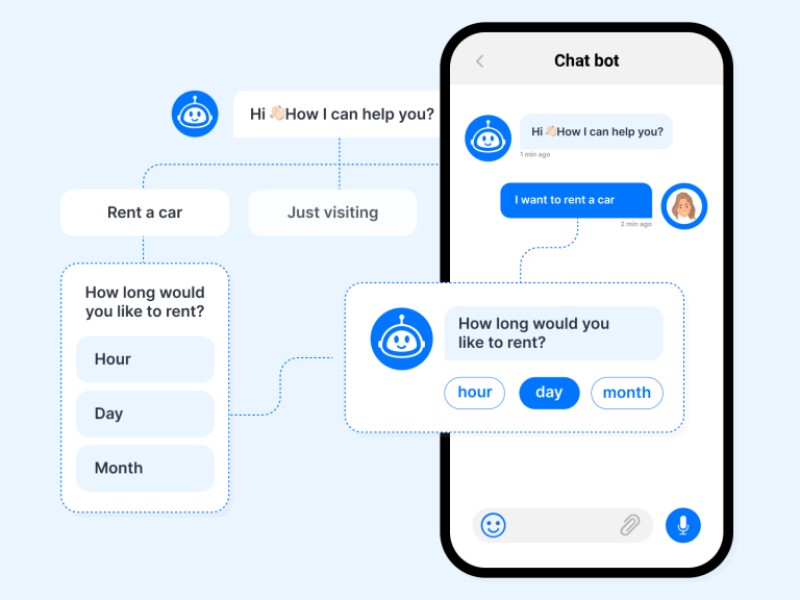
Chatbots are no longer tools that answer from rigid scripts. Thanks to the development of large language models (LLMs), AI chatbots are becoming more flexible, more natural and able to handle more complex situations.
Today's virtual assistants can advise on products, answer questions and support customers 24/7 regardless of staff working hours. During interactions, chatbots also help businesses gather more data on needs, interests and the problems customers commonly face.
Automating common questions significantly reduces the load on the customer care team, letting staff focus on cases that need deeper expertise. When deployed well, an AI chatbot not only improves the customer experience but also helps optimize operating cost.
5. Optimizing SEO and advertising with AI
AI is strongly affecting how businesses run SEO and online advertising. This change forces marketers to adapt quickly if they want to keep reaching customers effectively.
In SEO, AI tools can support keyword research, analyze search intent, spot content gaps and suggest ways to optimize articles. In advertising, AI helps allocate budget automatically, choose suitable target audiences and optimize campaign performance in real time based on the data collected.
In addition, the arrival of AI Overviews and new search experiences means businesses need to focus more on quality content, real expertise and value for users. This will be the deciding factor for competitiveness in the digital environment in the period ahead.
What should a business prepare before the AI marketing wave?
Using AI effectively is not only about technology; it also depends on strategy and people.
A business should:
- Define clear goals for using AI.
- Invest in quality data.
- Train the team in AI skills.
- Build a content review process.
- Ensure the security and privacy of customer data.
- Test on a small scale before expanding.
Preparing early will help a business take advantage of what AI offers instead of being caught off guard by market changes.
Conclusion
2026 marks the period when AI moves from an experimental trend to practical use in marketing. Generative AI, deep personalization, predictive analytics, smart chatbots and AI-driven SEO and advertising are reshaping how businesses reach customers.
However, AI is not a "magic wand" that fully replaces people. The real value lies in combining technology, data and strategic thinking. Businesses that apply AI at the right time and for the right goals will raise their marketing performance, optimize their resources and build a lasting competitive advantage in the digital era.
Related posts
Need tailored advice for your business?
Click Star helps you build a solution that fits your industry and scale. We answer every question during business hours.